
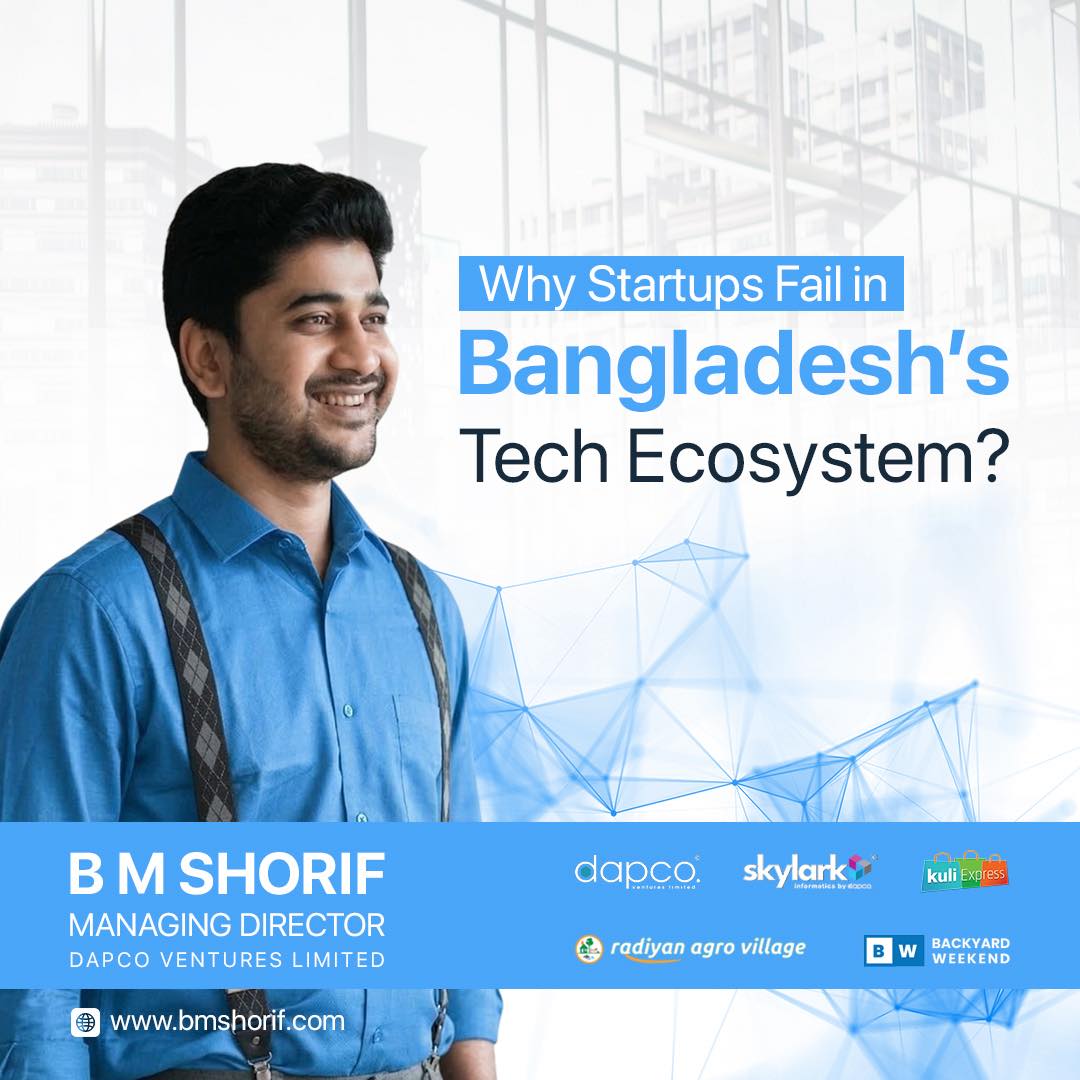
Bangladesh has seen a surge in tech startups over the last decade. From fintech to SaaS to e-commerce, ambitious entrepreneurs are trying to transform the country’s digital landscape. Yet, despite the buzz and investment, a striking number of startups fail within their first few years. Why?
Through my experience in the local ecosystem, I’ve observed that startup failure in Bangladesh is rarely about a lack of ideas—it’s about execution, ecosystem, and mindset. Here’s a closer look.
⸻
- Insufficient Funding & Investment Gaps
Bangladesh still has a limited pool of local venture capital. Many startups rely heavily on foreign investors, making them vulnerable to global market shifts. Without sufficient early-stage funding, even promising startups struggle to scale.
This lack of consistent capital is not just a financial problem—it’s a growth problem. Without runway, founders are forced to compromise on product development, marketing, or hiring.
⸻
- Weak Product-Market Fit
A great idea in theory doesn’t always translate to a successful business. Many startups launch products without deep understanding of the local market.
Bangladesh is a price-sensitive and diverse market, and consumer adoption can be slow. Startups that fail to adapt their offerings to local realities often run into early friction, limiting traction and growth.
⸻
- Leadership & Team Challenges
Technical skills alone do not make a startup succeed. I’ve seen teams with brilliant developers fail because of poor leadership, unclear roles, and internal conflicts.
Startups need not just technical talent but also operational experience, business strategy, and people management. Without this, scaling becomes chaotic and unsustainable.
⸻
- Ecosystem Support Is Still Developing
While there are incubators, accelerators, and co-working spaces in Dhaka and Chittagong, the structured mentorship and support network is limited.
Many mistakes that could have been avoided through guidance become expensive lessons. Founders often learn through trial and error—sometimes too late to recover.
⸻
- Regulatory & Infrastructure Barriers
Operating a startup in Bangladesh comes with challenges like slow banking processes, internet reliability issues outside cities, and complex registration procedures.
While policies are improving, startups still navigate an environment where operational friction can drain resources and energy.
⸻
- Talent Shortage
Bangladesh produces many graduates, but skilled tech talent and experienced managers are still scarce. Building a strong team that can execute vision is one of the biggest hurdles for startups.
Without the right people, even a good product can fail to reach its potential.
⸻
- Cultural & Mindset Factors
Finally, mindset matters. In Bangladesh, there’s often a fear of failure and social stigma, which can discourage risk-taking. Many founders abandon promising ventures prematurely.
Additionally, many entrepreneurs expect rapid returns, underestimating the time and effort required to scale a tech startup.
⸻
Final Thoughts
Startups in Bangladesh fail not because the ideas are weak—they fail because the ecosystem, infrastructure, funding, talent, and mindset are still catching up.
The good news? Each failure teaches the ecosystem lessons. Every founder who navigates these challenges contributes to a more mature, resilient, and future-ready tech landscape in Bangladesh.
For aspiring entrepreneurs: focus on product-market fit, strong teams, and smart fundraising. Learn from failures around you. And most importantly, embrace the long journey.
— B M Shorif
Managing Director
DAPCO Ventures Limited